


Faculty
Our faculty members are highly experienced professionals, researchers, and industry experts who bring a wealth of knowledge and real-world expertise to the classroom.
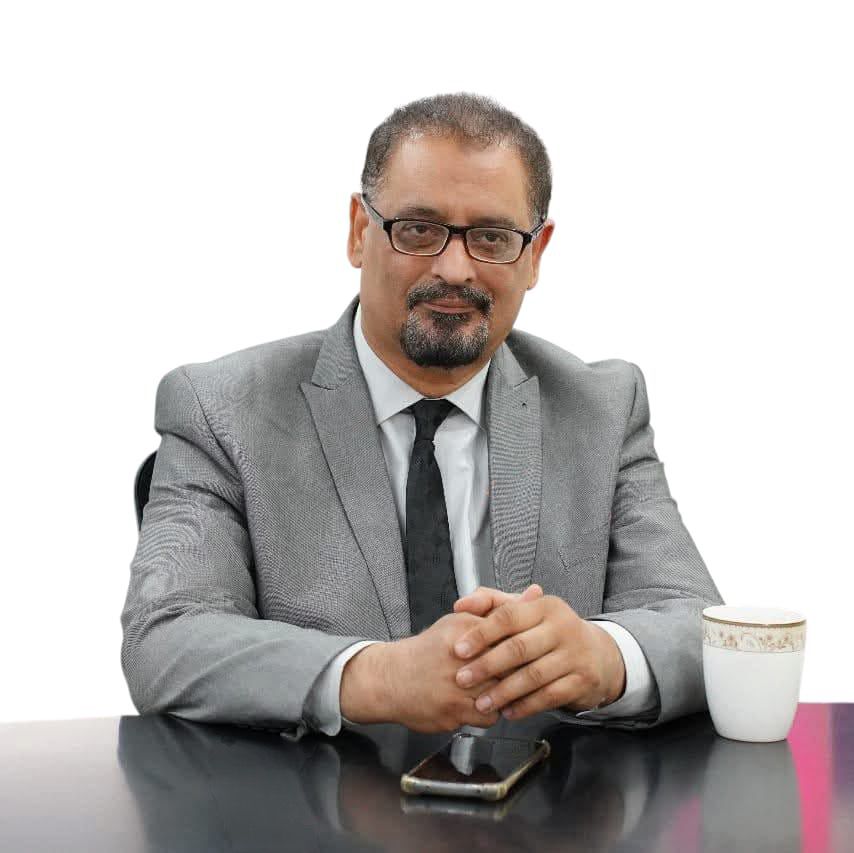
Mr. Kaukab Jamal Zuberi
Associate Dean
Mr. Kaukab Jamal Zuberi
Qualification: Associate Dean
Kaukab Jamal Zuberi is a prominent figure in the field of digital forensics and cyber security in Pakistan. He serves as the Associate Dean of the Department of Criminology and Forensic Sciences at Lahore Garrison University (LGU) and is the Director of the university’s Digital Forensic Research and Service Centre (DFRSC).
In 2016, Zuberi led the establishment of the DFRSC at LGU, marking it as the first center of its kind in Pakistan. The center focuses on research, training, certification, and degree programs in various fields of digital forensics and cyber security. This center is pioneering efforts to address the growing need for cybersecurity and digital forensics in Pakistan, focusing on training professionals and conducting research to enhance the nation’s cyber capabilities. He aims to prepare experts who can navigate the complexities of digital security in both public and private sectors.
Beyond his academic roles, Zuberi is the founding chairman of the International Association of Digital Forensic Experts (IADFE).
Zuberi has also contributed to discussions on cyber security challenges in Pakistan, highlighting issues such as phone scams, data leaks, and the need for robust data protection laws. He has been actively involved in discussions surrounding critical infrastructure in Pakistan, emphasizing the importance of robust cybersecurity measures to protect national interests. His work includes publishing articles that advocate for better regulatory frameworks in these areas.

Dr. Sundus Munir
Associate Professor | HOD
Dr. Sundus Munir
Qualification: Ph.D – H.O.D
Specialization:
Research Interest :
Publication :
Email:
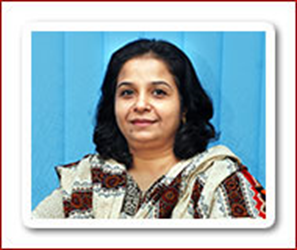
Dr Naureen Naeem
Associate Professor
Dr Naureen Naeem
Qualification: PhD (Food Technology)
Specialization: Food Technology
Research Interest : Food Safety, Adulteration and Food Fraud Investigation by using latest techniques of Artificial Intelligence and Machine Learning.
Publication: https://drive.google.com/drive/u/0/folders/17z2wij2BJVANW6Mr3WTSt-rWv5qo_ZXc
Email:
| [email protected] |
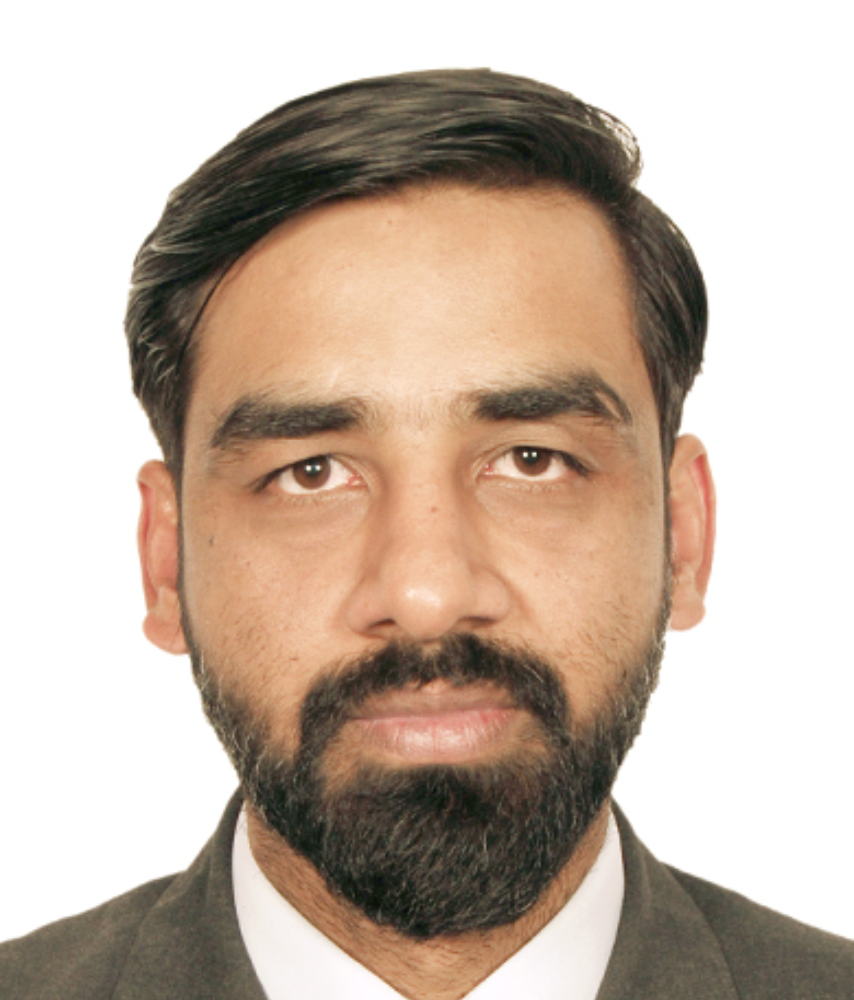
Dr.Zohaib Ahmad
Assistant Professor
Dr Zohaib Ahmad
Qualification: PhD
Specialization: Artificial Neural Network Parametrization
Research Interest : Neural Networks, Deep Learning, Algorithms, Neural Computing, and Time Series Prediction.
Publication:
1. Ahmad Zohaib, Tariq Mahmood, Amjad Rehman, Tanzila Saba, and Faten S. Alamri. “Enhancing Time Series Forecasting with an Optimized Binary Gravitational Search Algorithm for Echo State Networks.” IEEE Access (2023). (SCI, IF:3.9)
2. Ahmad, Zohaib, Jianqiang Li, and Tariq Mahmood. “Adaptive Hyper parameter Fine-Tuning for Boosting the Robustness and Quality of the Particle Swarm Optimization Algorithm for Non-Linear RBF Neural Network Modelling and Its Applications.” Mathematics 11.1 (2023): 242. (SCI, IF:2.592)
3. Ahmad, Zohaib, Muhammad Qasim Memon, Aasma Memon, Parveen Munshi, and Muhammad jaffar Memon. “Echo State Network Optimization using Hybrid-Structure Based Gravitational Search Algorithm with Square Quadratic Programming for Time Series Prediction.” INTERNATIONAL ARAB JOURNAL OF INFORMATION TECHNOLOGY 19, no. 3 A (2022): 530-535. (SCIE, IF:1.35)
4. Ahmad, Zohaib, Muhammad Salman Pathan, and Ahsan Wajahat. “A Comparative Analysis of Malware Detection Methods Traditional vs. Machine Learning.” International Journal for Electronic Crime Investigation 7, no. 4 (2023): 3-18.
5. Ahmad, Zohaib, Ahsan Wajahat, and Muhammad Salman Pathan. “A Comprehensive Study for Malware Detection through Machine Learning in Executable Files.” International Journal for Electronic Crime Investigation 8, no. 1 (2024): 3-48.
6. Yang, Cuili, Junfei Qiao, Ahmad Zohaib, Kaizhe Nie, and Lei Wang. Online Sequential Echo State Network with Sparse RLS algorithm for Time Series Prediction. Neural Networks, 2019, 118: 32-42. (SCI, IF: 5.535).
7. Yang, Cuili, Xinxin Zhu, Ahmad Zohaib, Lei Wang, and Junfei Qiao. “Design of incremental echo state network using leave-one-out cross-validation.” IEEE Access 6 (2018): 74874-74884 (SCI, IF:3.9)
8. Bilal, Anas, Xiaowen Liu, Muhammad Shafiq, Zohaib Ahmed, and Haixia Long. “NIMEQ-SACNet: A novel self-attention precision medicine model for vision-threatening diabetic retinopathy using image data.” Computers in Biology and Medicine (2024): 108099. (SCI, IF: 7.7)
9. Bilal, Anas, Azhar Imran, Xiaowen Liu, Xiling Liu, Zohaib Ahmad, Muhammad Shafiq, Ahmed M. El-Sherbeeny, and Haixia Long. “BC-QNet: A quantum-infused ELM model for breast cancer diagnosis.” Computers in Biology and Medicine 175 (2024): 108483. (SCI, IF: 7.7)
10. Bilal, Anas, Abdulkareem Alzahrani, Abdullah Almuhaimeed, Ali Haider Khan, Zohaib Ahmad, and Haixia Long. “Advanced CKD detection through optimized metaheuristic modeling in healthcare informatics.” Scientific Reports 14, no. 1 (2024): 12601. (SCI, IF: 3.8)
11. Mahmood, Tariq, Amjad Rehman, Tanzila Saba, Tahani Jaser Alahmadi, Muhammad Tufail, Saeed Ali Omer Bahaj, and Zuhaib Ahmad. “Enhancing Coronary Artery Disease Prognosis: A Novel Dual-Class Boosted Decision Trees Strategy for Robust Optimization.” IEEE Access (2024). (SCI, IF:3.9)
12. Ahmad Zohaib, Cuili Yang, and Junfei Qiao. An Accelerated PSO Based Self-organizing RBF Neural Network for Nonlinear System Modeling and Identification. In International Conference on Machine Learning and Intelligent Communications, 2019: 769-777.(Book Chapter)
13. Ahmad Zohaib, Kaizhe Nie, Junfei Qiao, and Cuili Yang. Batch Gradient Training Technique with Smoothing L0 Regularization for Echo State Networks. In book: Machine Learning and Intelligent Communications, 2019: 491-500.( (Book Chapter)
14. Ahmad Zohaib, Kaizhe Nie, Junfei Qiao, and Cuili Yang. Hybrid Structure Based PSO for ESN Optimization. In 2019 IEEE Symposium on Product Compliance Engineering-Asia (ISPCE-CN). 2019: 1-5. (EI Conference)
15. Ahmad Zohaib, Muhammad Qasim Memon, Aasma Memon, Parveen Munshi, and Muhammad Jaffar Memon. “A New Hybrid Approach of Gravitational Search Algorithm with Spiral-Shaped Mechanism-based RBF Neural Network.” In 2021 22nd International Arab Conference on Information Technology (ACIT), 1-6. IEEE, 2021. (EI Conference)
Email:
| [email protected] |
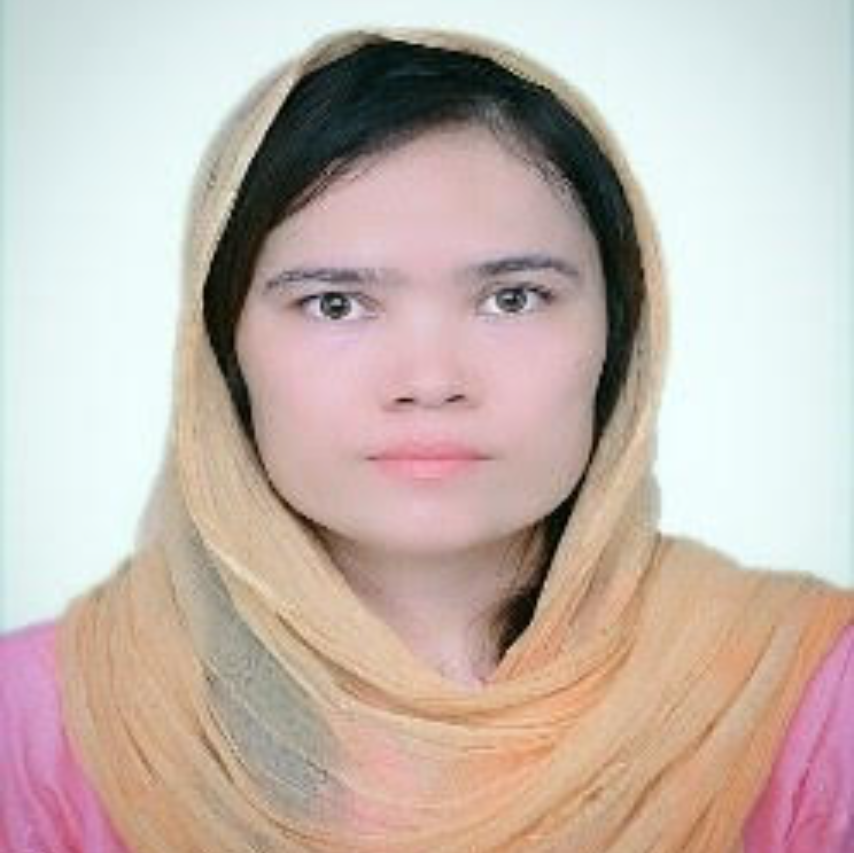
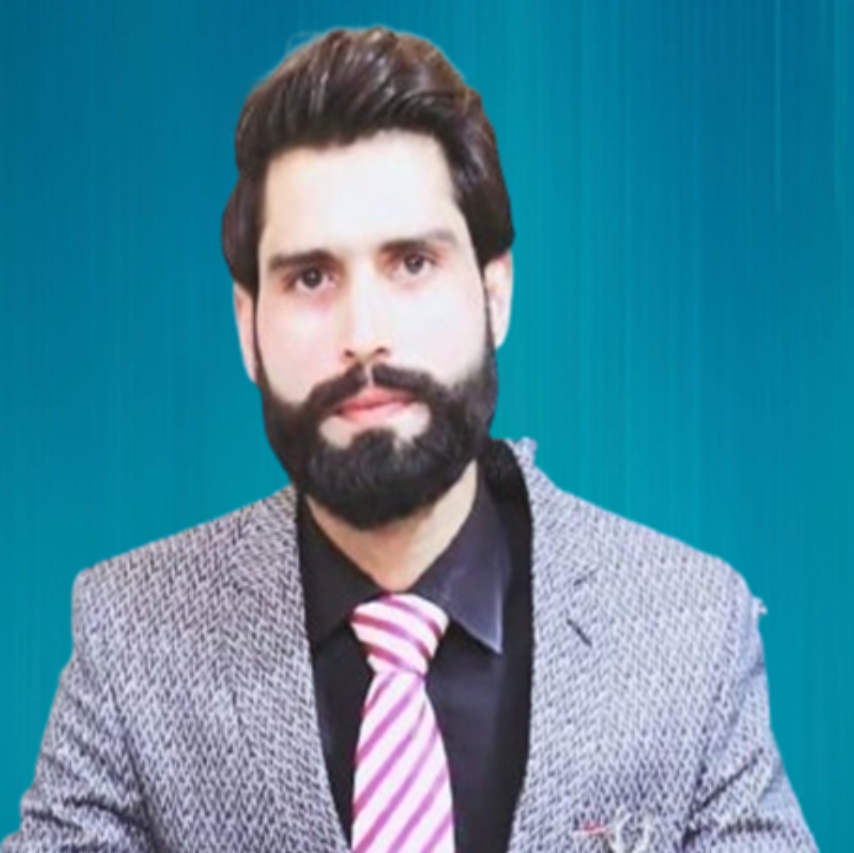
Bilal Khan
Lecturer
Bilal Khan
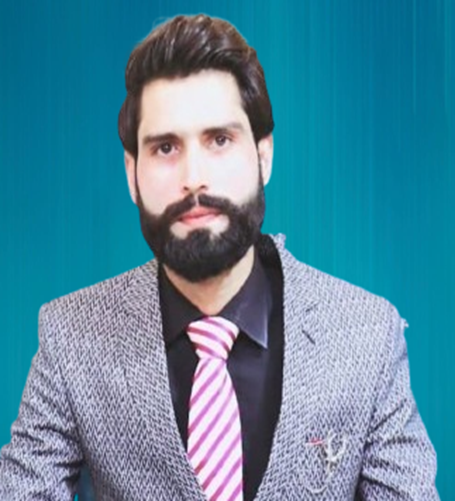
Qualification: Mphil
Specialization: Mphil Cs
Research Interest : Cyber Security
Email:
| [email protected] |
Warda Maqsood
Lecturer
Warda Maqsood
Qualification: MPhil
Specialization: Criminology and Criminal Justice System
Research Interest : Community Policing, Gender based violence, Violence against domestic workers, DNA Profiling in Pakistan and Cyber Crimes
Email:
| [email protected] |

Ms. Faryal Tooqueer
Lecturer
Ms. Faryal
Qualification: MS Forensic Chemistry
Specialization: Forensic Chemistry
Research Interest : Forensic science and digital forensic
Email:
| [email protected] |
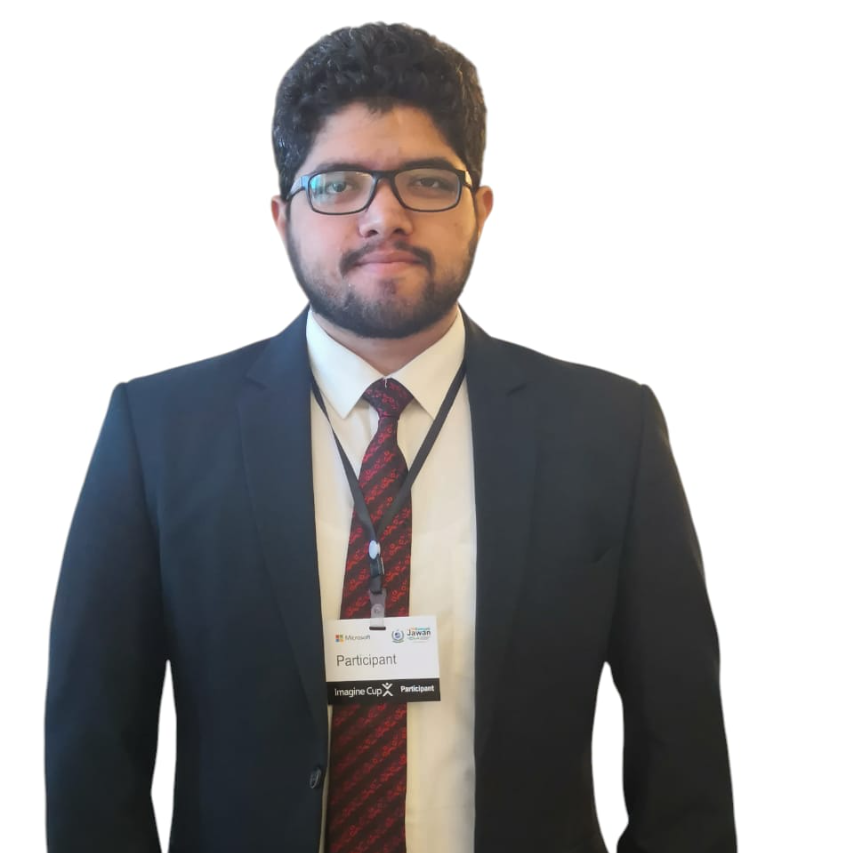
Muhammad Shairoze Malik
Team Lead
Muhammad Shairoze Malik
Qualification: MS Information Security
Specialization: Digital Forensics, Incident Response and Cyber Security
Research Interest : Toxicology, Nano forensics and digital forensics
Publication :
1.M. Shairoze Malik (2024), Analyzing the Trade-Offs of Data Sharing in Social Networks and Privacy Concerns, International Journal for Electronic Crime Investigation 8(4).
2.M. Shairoze Malik (2024), IoT Malware: A Comprehensive Survey of Threats, Vulnerabilities, and Mitigation Strategies, International Journal for Electronic Crime Investigation 8(1).
3.M. Shairoze Malik (2023). The Security Issues and challenges in Cloud Computing. International Journal for Electronic Crime Investigation, 7(1).
4.M. Shairoze Malik (2022), Wireless Router Forensics: Finding Artifacts of Suspect Traces With A Raspberry Pi And Kali Linux., Jilin Daxue Xuebao (Gongxueban)/Journal of Jilin University (Engineering and Technology Edition)
5.M. Shairoze Malik (2022), The Forensics Artifacts on Remote Desktop Protocol and Service. International Journal for Electronic Crime Investigation, 6(3).
6.M. Shairoze Malik (2021), Role of Artificial Intelligence in Cybersecurity Improvement. International Journal for Electronic Crime Investigation, 5(1).
7.M. Shairoze Malik (2022), A Review of Cyber-Attacks and Cyber Security – What to Know.
8.M. Shairoze Malik (2022), Machine Learning in Malware Detection. IJECI Vol 5(3)
9.M. Shairoze Malik (2021), Cyber Security and Covid-19 Pandemic. IJECI Vol 5(2)
10.M. Shairoze Malik (2021), Role of Artificial Intelligence in Cybersecurity Improvement. IJECI Vol 5(1)
11.M. Shairoze Malik (2020), A literature Review of 2D Face Recognition Systems: Attacks and Defenses. IJECI Vol 4(2).
12.M. Shairoze Malik (2020), A Brief Overview of Social Engineering. IJECI Vol 4(1)
13.M. Shairoze Malik (2020), Man in the Middle – Hacker’s Playground. IJECI Vol 4(1)
14.M. Shairoze Malik (2019), Cyber Security – Incident Response and Management. IJECI Vol 3(3)
15.M. Shairoze Malik (2019), Ransomware Detection and Defense. IJECI Vol 3(2)
16.M. Shairoze Malik (2019), Internet of Things & Cyber Security. IJECI Vol 3(1)
Email:
| [email protected] |

Arafat Ali Khan
Assistant Lecturer
Arafat Ali Khan
Qualification: Bachelors
Specialization: Digital Forensics & Cyber Security
Research Interest: Computer Forensics, Video Forensics, Mobile Device Forensics, Network Forensics and Ethical Hacking
| [email protected] |
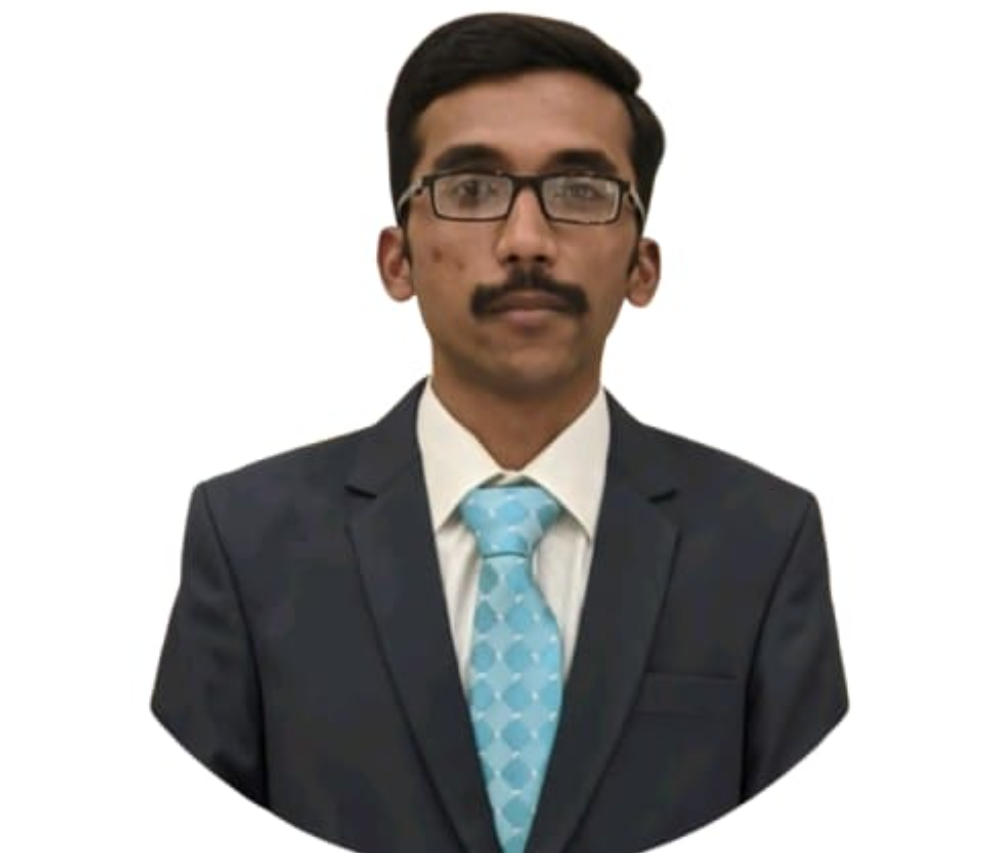
Muhammad Haseeb Zia
Lecturer
Muhammad Haseeb Zia
Qualification: MS DS
Specialization:
Research Interest :
Publication:
Email:
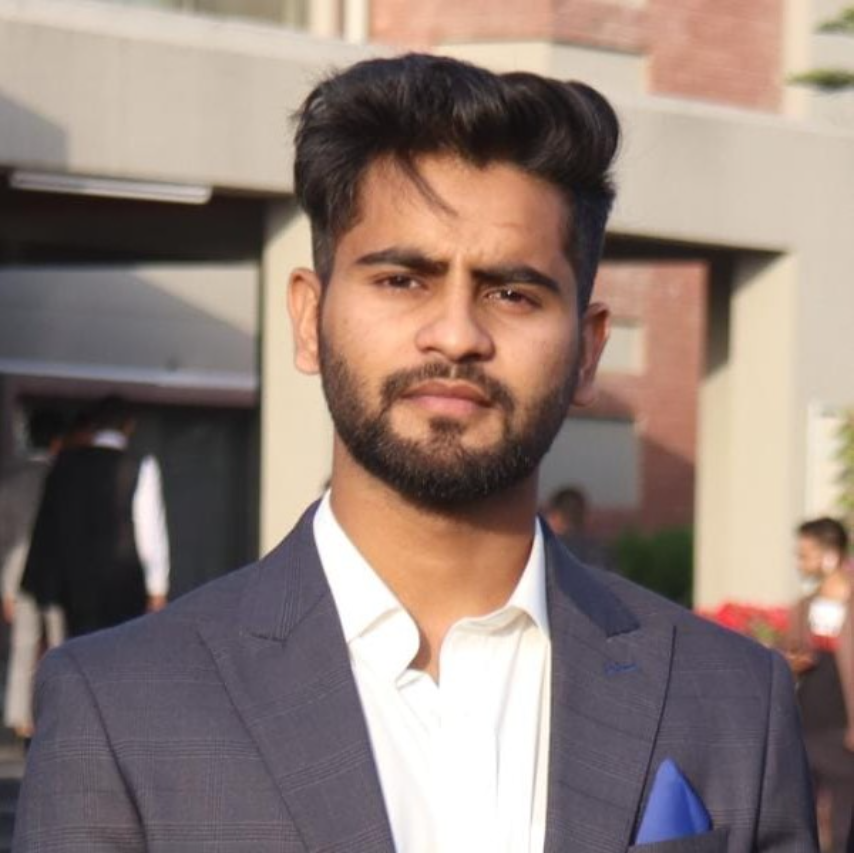
Umer Farooq
Assistant Lecturer
Umer Farooq
Qualification: BS Computer Science
Specialization: MERN Stack Developer
Research Interest : Cyber Security
Email:
| [email protected] |
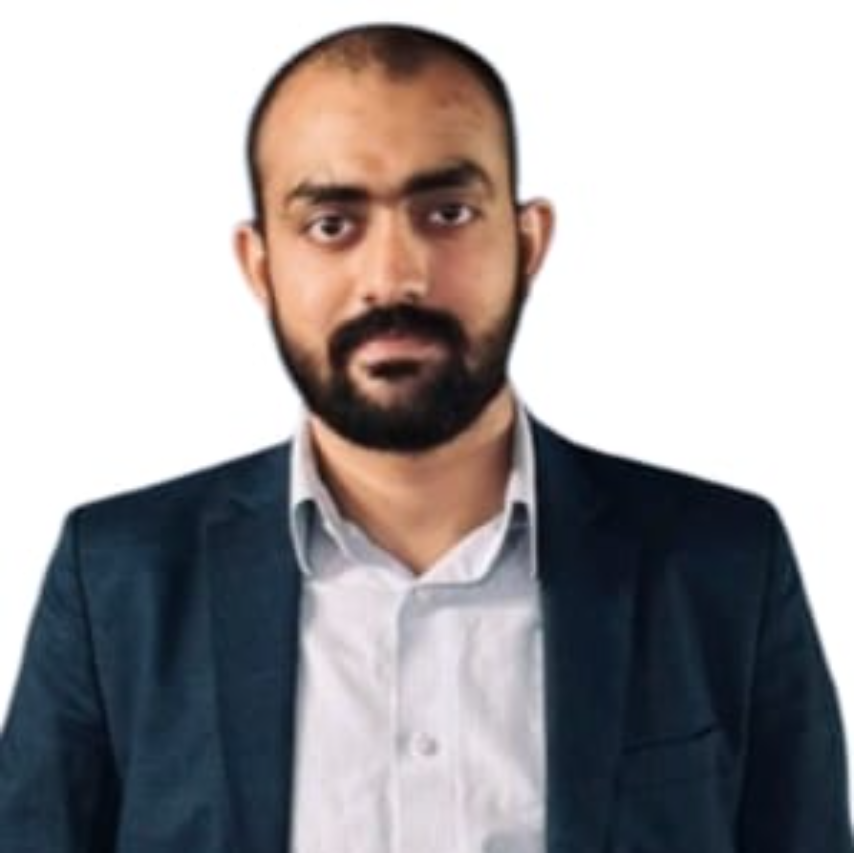
Saud Farooq
Saud Farooq
Highly motivated cybersecurity professional with proven expertise in penetration testing, red teaming, and incident response. Adept at identifying critical vulnerabilities across systems, networks, and applications. Strong communication and collaboration skills, fostering security awareness and driving successful remediation efforts with diverse stakeholders.